Route of two to three days - about 200 Km from Rome (Aurelia + Rome / Civitavecchia) and 200 + km from central Tuscany - touching the steps of:
- Tarot Garden (Capalbio) (A)
- Borgo di Capalbio (B)
- Porto Ercole (Argentario) (C)
- Saturnia (D)
- Pitigliano (E)
- Sovana / Sorano (F)
View Larger Map
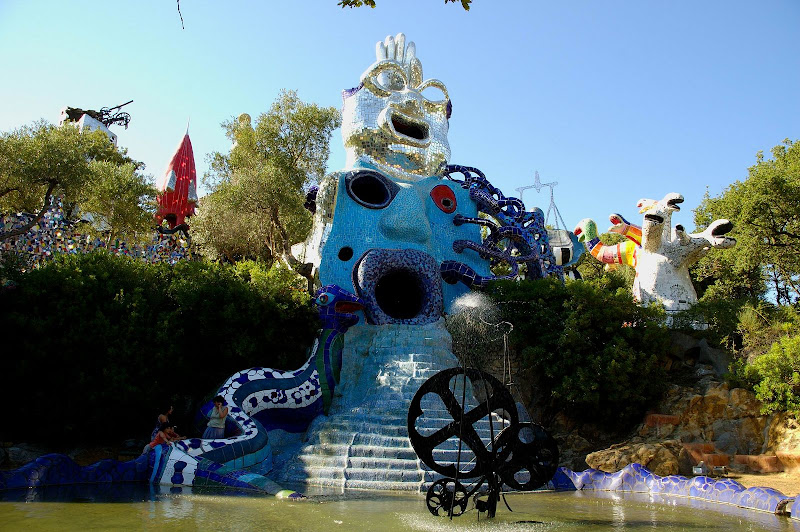
Tarot Garden
Recommended: Absolutely
Difficulty: Easy
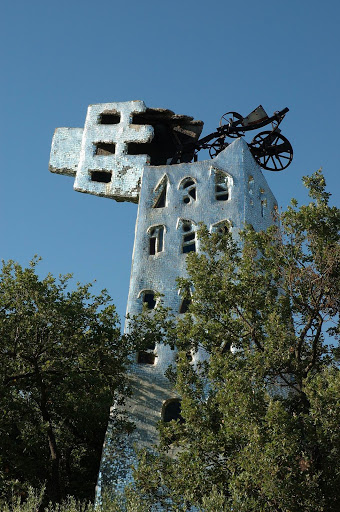
A real hidden gem, dream the dream of a French architect who was inspired by the events of his life as well as the mystique of the tarot cards, to make an anonymous hill south of Capalbio a real game of lights and shadows, mirrors and tiles, statues, sculptures, dreams of color and cement.
Please visit the official website (search Google for 'Tarot Garden') for opening hours of the park and the cost of the ticket (IMHO it is worth visiting at any price:))
In Wikipedia it says:
Following the inspiration had during a visit to Parque Guell by Antoni Gaudi in Barcelona, \u200b\u200bwas strengthened by the visit to the garden of Bomarzo, Niki de Saint Phalle began construction of the Tarot Garden in 1979, on a half-hectare covered from the Mediterranean on the hill at Garavicchio Capalbio, in Maremma, made available by Nicola and Carlo Caracciolo through the mediation of Marella Caracciolo Agnelli.
identifying the Garden a dream of his life and spiritual magic, Niki de Saint Phalle has been dedicated to building the twenty-two imposing figures in steel and concrete covered with glass, mirrors and colorful ceramics for more than seventeen years.
finished until the summer of 1996, led to the creation of the Garden, as well as an enormous amount of plant, costing about 10 billion lire entirely self-financed by the author.
In 1997 Niki de Saint Phalle was the Foundation The Tarot Garden whose purpose is to preserve and maintain the work carried out by the sculptor. The establishment of the Foundation has been edited by Marie D. France Pestel-Debord, current Vice-President, and Stefano Mancini, Secretary-General. On May 15 1998il Tarot Garden was opened to the public.

Village of Capalbio
Recommended: Yes
Difficulty: Easy
is the most common in the south of Tuscany, the environmental context in which it and the art-historical importance taken during the Renaissance, Capalbio was also known as the little Athens. In addition, the municipality has been awarded with 5 sails and the first position in the "Blue Guide" Legambiente-2007 Italian Touring Club for the protection and wise management of its beaches, the landscape and environment. (Source Wikipedia)


Porto Ercole
Recommended: Ni

Terme di Saturnia
Recommended: Absolutely
is the most common in the south of Tuscany, the environmental context in which it and the art-historical importance taken during the Renaissance, Capalbio was also known as the little Athens. In addition, the municipality has been awarded with 5 sails and the first position in the "Blue Guide" Legambiente-2007 Italian Touring Club for the protection and wise management of its beaches, the landscape and environment. (Source Wikipedia)


Porto Ercole
Recommended: Ni
Difficulty: Medium
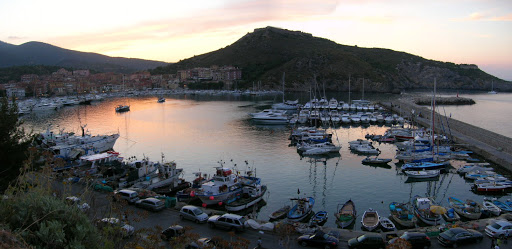
Porto Ercole is a fraction of the town of Monte Argentario, in the province of Grosseto. With Porto Santo Stefano (the center most populous) is one of the two major towns that form the municipality.
In medieval times the town was a possession of the Abbey of Tre Fontane in Rome, before moving on to Aldobrandeschi in thirteenth-century era. After a brief period under the Orsini of Pitigliano Porto Ercole became part of the Republic of Siena in the XV century. In the second half of the sixteenth century the country came under the rule of Deans, becoming the cornerstone of the entire defense system of the area. Porto Ercole, following the fortunes of the deans of the state, became part of the Grand Duchy of Tuscany only in the first half of the nineteenth century.
the early seventeenth century died at Porto Ercole Michelangelo Merisi da Caravaggio; the place of death remained shrouded in mystery for decades, according to a biographer who died because of the time on a beach (maybe Feniglia), according to others, in the old country. (Source Wikipedia)
Personally, I've never been particularly upset the Argentario, but I recognize to be in contrast with the millions of tourists each year flock to its beaches and villages. Moderate
since before arriving in Porto Ercole (however I would advise instead of chaotic Santo Stefano), you may run into traffic jams are not easy to overcome. :)
Porto Ercole is a fraction of the town of Monte Argentario, in the province of Grosseto. With Porto Santo Stefano (the center most populous) is one of the two major towns that form the municipality.
In medieval times the town was a possession of the Abbey of Tre Fontane in Rome, before moving on to Aldobrandeschi in thirteenth-century era. After a brief period under the Orsini of Pitigliano Porto Ercole became part of the Republic of Siena in the XV century. In the second half of the sixteenth century the country came under the rule of Deans, becoming the cornerstone of the entire defense system of the area. Porto Ercole, following the fortunes of the deans of the state, became part of the Grand Duchy of Tuscany only in the first half of the nineteenth century.
the early seventeenth century died at Porto Ercole Michelangelo Merisi da Caravaggio; the place of death remained shrouded in mystery for decades, according to a biographer who died because of the time on a beach (maybe Feniglia), according to others, in the old country. (Source Wikipedia)
Personally, I've never been particularly upset the Argentario, but I recognize to be in contrast with the millions of tourists each year flock to its beaches and villages. Moderate
since before arriving in Porto Ercole (however I would advise instead of chaotic Santo Stefano), you may run into traffic jams are not easy to overcome. :)

Terme di Saturnia
Recommended: Absolutely
Difficulty: Medium
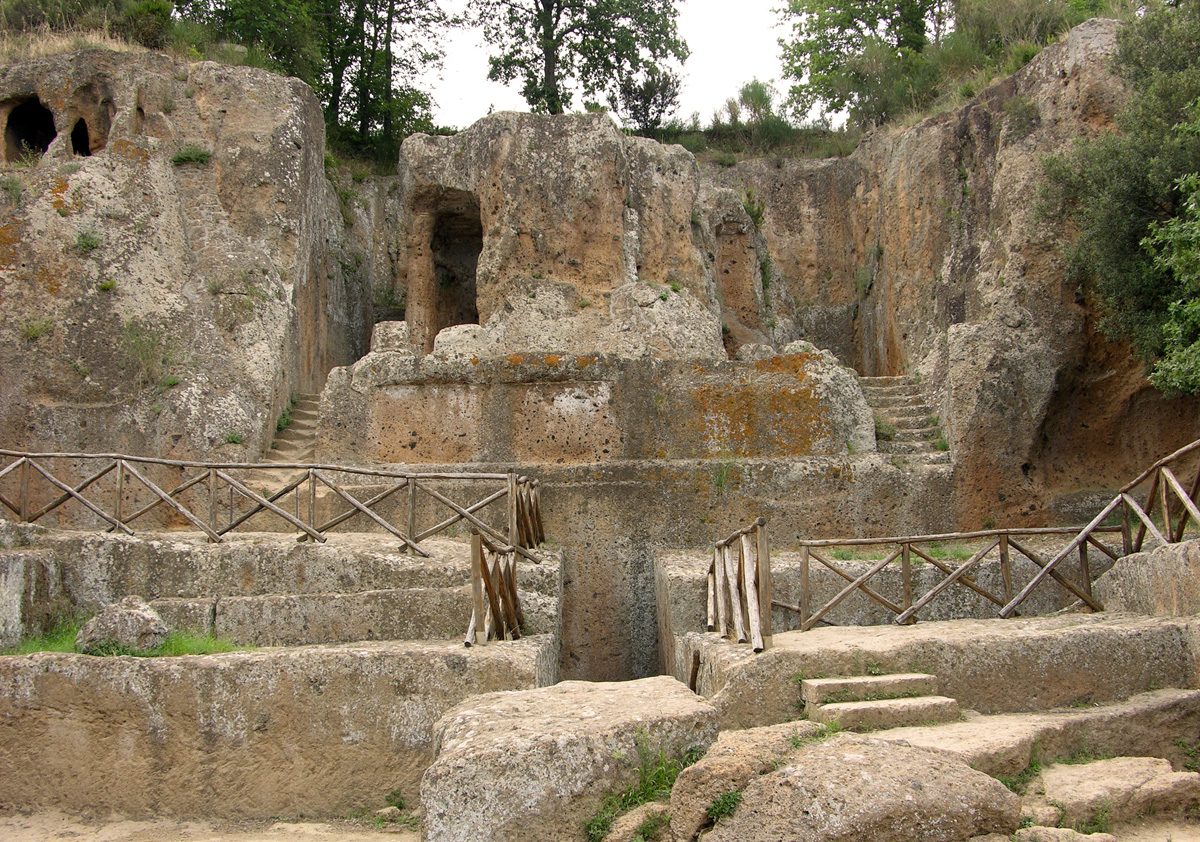
The resort was built in Roman times along the Via Clodia near the Etruscan necropolis of Pian di Palma and hot springs, already known at the time, from which it took its name.
The sulphurous water at 37 degrees and a half have known therapeutic properties and know how to donate only to sink into relaxation and wellness. Remarkable is, however, contact with nature at the same time as the Maremma can be harsh - especially in summer - with colors ranging from dark green to yellow to brown in all shades to to almost black. (Source Wikipedia)
Really destination not to be missed if it were not for the horde of tourists each day (winter and summer) attack the small waterfalls and pools - available free of charge - to relax in the heat of the thermal waters .


Pitigliano
Recommended: Absolutely
The resort was built in Roman times along the Via Clodia near the Etruscan necropolis of Pian di Palma and hot springs, already known at the time, from which it took its name.
The sulphurous water at 37 degrees and a half have known therapeutic properties and know how to donate only to sink into relaxation and wellness. Remarkable is, however, contact with nature at the same time as the Maremma can be harsh - especially in summer - with colors ranging from dark green to yellow to brown in all shades to to almost black. (Source Wikipedia)
Really destination not to be missed if it were not for the horde of tourists each day (winter and summer) attack the small waterfalls and pools - available free of charge - to relax in the heat of the thermal waters .


Pitigliano
Recommended: Absolutely
Difficulty: Easy
known since ancient times as 'little Jerusalem' - for the historical presence of a synagogue and a Jewish community has always been well integrated into the social - and preserves a very suggestive historical center.
Coming from the sea, climbing the SS 74 Maremma, you will immediately notice the typical houses that stick out from a large outcrop of tufa, absolutely sheer. The cliff of Pitigliano is surrounded on three sides by many gullies, full of caves dug into the tufa in the valley flow the rivers Lens, Meleta and Proc.
Waterworks, several churches and the Palazzo Orsini make the 'little Jerusalem' a gem not to be missed.


Sovana
Recommended: Yes
known since ancient times as 'little Jerusalem' - for the historical presence of a synagogue and a Jewish community has always been well integrated into the social - and preserves a very suggestive historical center.
Coming from the sea, climbing the SS 74 Maremma, you will immediately notice the typical houses that stick out from a large outcrop of tufa, absolutely sheer. The cliff of Pitigliano is surrounded on three sides by many gullies, full of caves dug into the tufa in the valley flow the rivers Lens, Meleta and Proc.
Waterworks, several churches and the Palazzo Orsini make the 'little Jerusalem' a gem not to be missed.


Sovana
Recommended: Yes
Difficulty: Easy
The current center was developed during the Middle Ages in the vicinity of existing Etruscan necropolis, under the control of the family Aldobrandeschi, who had built a castle during the eleventh century. In medieval times it became a free municipality and also the birthplace of Sovana Hildebrand, later Pope Gregory VII, was also capital of the county.
At the end of the thirteenth century was inherited by following the same fate Orsini di Sorano and Pitigliano until the fifteenth century, an era in which the center was conquered by the Sienese. In the mid-sixteenth century the
final fall of the Republic of Siena Sovana brought into the hands of the Medici, who stays in the Grand Duchy of Tuscany. (Source Wikipedia)


The current center was developed during the Middle Ages in the vicinity of existing Etruscan necropolis, under the control of the family Aldobrandeschi, who had built a castle during the eleventh century. In medieval times it became a free municipality and also the birthplace of Sovana Hildebrand, later Pope Gregory VII, was also capital of the county.
At the end of the thirteenth century was inherited by following the same fate Orsini di Sorano and Pitigliano until the fifteenth century, an era in which the center was conquered by the Sienese. In the mid-sixteenth century the
final fall of the Republic of Siena Sovana brought into the hands of the Medici, who stays in the Grand Duchy of Tuscany. (Source Wikipedia)